Wednesday, May 28, 2025

Time flies.....

I have not written since 2020. The reason for this long absence was that I was regrouping trying to figure out next steps. Our effort to get the school district to honor its promise to become sustainable failed. Our efforts to get the district to acknowledge and work toward the goal they themselves set in 2020, resulted in the school board rewriting the rules so that you could only speak to them about something THEY had put on the agenda. If only they valued the issues of Climate Change and the environment should have shown them the importance of their work in this simple two-minute video
We stopped presenting data to support the human and budgetary value of becoming sustainable and reflected on what our little valient group of committed adults could tdo to make way for needed change. My work within a large urban district that was being buffeted by the extreme right-wing agenda to destroy public education, with the constant rhetoric about its presumed failure, taught me much. Leaders, though well-intentioned, were trying to appease the beast by working harder to meet standardized testing goals, and in some ways, this produced some positive change.

More money was directed to help teachers hone their skills in teaching their content, or in the case of elementary schools, on how they taught fundamentals such as reading. At the outset reforms helped reset the importance of accountability and goals. Initially, there was a flourishing of different programs that allowed educators to adopt what worked for them in their individual classrooms, and recognition that all children learn differently as they achieve various benchmarks at different times.

Unfortunately, this ended in an attempt to replicate and codify a single success and force teachers to usescripted lessons instead of responding to the individual and class needs at any given time. What we have now is a complete abrogation of the expertise and creativity of educators!

Knowing that we could not address this greater injustice that was being perpetrated by people who were ignorant and unwilling to listen to teachers, our little group fought on ONLY TO GIVE CHILDREN THE LOVE OF NATURE that gives them healthy mental interactions and a sense of possibility. Our only question following the defeat was, what needs to happen for people in our community to understand how important nature education is and activate them to communicate with their leaders.

Wednesday, November 30, 2022


I have not posted in a long while.   After the pandemic I chose to retire when my school refused to restart its programs of sustainablity.  For the past year I have been working with a group of concerned citizens to force the district to live up to its promise to become sustainable.  The promise was made in October of 2020 followed by a proclamation honoring the district for this bold move which supported the city's sustainability goals.  

I will post more about this as we move forward.  

Tuesday, November 30, 2021

Today I was reminded that each day we meet children who wear a happy face despite some overwhelming realities.  I was alone in the library shelving books when a first grader arrived.  She checked her books in and carefully placed them on the sorting shelves.  As she took her position looking for a book nearby, I asked her if she had a good Thanksgiving.  "Yes," she said, hesitantly.  Wondering where the hesitancy came from I probed a bit.  Did you have Thanksgiving with Mom and Dad?  What followed changed the rest of my week. 
"Well, it is just that my family has lots of fights, so we can't all be together at the same time." Then she explained how she had spent time with Mom and then with Dad, but woven in was the narrative of "big fights."  Sometimes grown-ups can act more like children than children, and it is so sad that many children suffer through adult behavior that reflects all that we are trying to help our children learn to eschew.
Her demeanor and the expression of the depth of her sadness over what had taken place over Thanksgiving  lead me to change the Native American story I haad planned to tell this week in celebration of Native American month.

I told the Pueblo Tale, A Heart Full of Turqoise, which I learned from Joe Hayes when I lived in New Mexico.  I used the story with the children whose parents had come to the Clovis Carver Public library to learn how to parent.  Many were mandated by the court to attend because they were abusive.  I told this story the first night because it is highly engaging as children participate in the story and learn to sign for the things as indigenous Americans might have done.  

It is a bit brutal.  At one point in the story the good giant takes his hunting knife and kills the evil giant.  He cuts the evil giant "from his navel to his nose" exposing a heart full of thorns and cactus burrs and prickly things. The children look horrified, but the story doesn't end there. The good giant reaches into the evil giant's heart and removes them.  Then he pours in the finest rose quartz and turquise from his medicene pouch into the empty heart filling it. The good giant sews the evil giant back up, and when the evil giant wakes up HE becomes the protector of the children of the Pueblo.  Those children asked for that story every week for the 12 weeks of the program.  In the end I understood what the children saw in this story that they desperately needed to be true. They found hope that their parents could also be transformed.

When I told the story to third graders today I asked them why they thought the story was so powerful.  It amazes me when children this young get the message so clearly, and while they do not use words  like "ressurection" or "transformation"  they are quite capable of expressing the deep meanings of literature.    They told me enthusiastically that the evil giant turned good.  You can't ask for more than that.  

Traditional stories have deep and layered meaning that is important for us all to hear, share and retell.  These stories give us hope and sanity in a chaotic time of pandemic and divisions in our society. The children who listen so intently in front of my storytelling rocking chair give me hope that the future can be different (transformed) from the past!

Sunday, November 21, 2021

Planting the wild garden
Where Plants Come From
We had eager garden helpers on Friday!  We searched for and found a pinecone to turn into a bird feeder.  It is always fun to make this project with children.  We slather the cones with lard, then pat the seeds into the lard liberally (and onto the floor and surrounding table).  We use cotton twine to tie to the top of the cone so that it is easily hung in a tree or bush.  

We then talked about some of the seeds and berries in the garden and who benefits from leaving them rather than "cleaning up the garden"  We discussed the birds that migrate and those that stay behind in winter.  The kids were particularly interested in the Milk Weed --Asclepias Tuberosa!  It makes the most remarkable and orderly organization of the seeds inside the pod!

milkweed seed pod
Inside a Milkweed Pod

monarchs butterflies
Monarchs sipping nectar
When we pulled seeds out they were fascinated by how light and soft the silk around them is and we talked about the many ways that plants get planted.  They were quick to point out that birds eat them and poop them out, but they were shocked by the idea that wind, rain or even other animals can plant seeds as well.

All this was in the name of fun -- not one mention of what the kids had to learn!  I will wager that they will remember this even without any attempt to teach because they were fascinated.  Other questions that came up were;  Why are all those pine needles on the ground in the garden?  What are those purple berries that look like blue berries?  They were excited when I told them that they are poisonous to use, but not to the birds.  HOW come?  These are real questions and when a child is curious it builds their ability to critical thought.  HOW many teachable moments are lost to the corporations who script the lessons we must teach with "fidelity?"


Friday, April 03, 2020

Lawns are the enemy!

Westmeade works to be a sustainable community!  As part of my personal journey, during this time of sheltering in place,  I have been reading Douglas Tallamy's "Nature's Best Hope" which explains why lawns are an environmental disaster and offers how we can change that! 


Here are the five reasons we should rethink our lawns!

  1. Lawns displace the natural world! use two times the land area of all parks and reserves put together in the U.S.  They have wiped out the natural wildlife corridors that once existed in our landscape.  We add 500 sq. miles of lawn every year!
  2. Water use!  In the east 30% of our water supply goes to irrigation of lawns while in the drier west it is more like 60%.  That is 32 gallos for every person EVERY DAY!
  3. Chemicals.  
    • 40% of all lawn chemicals we use in the US have been banned in other countries because they cause cancer.  A big problem for pets and children who play on the lawn regularly!
    • 40-60% of these chemicals end up in our ground water and streams where they go on disrupting that food chain by killing plants and animals in the water.
  4. Time. We spend 3 billion collective hours on our lawns every year!  Think what that would look like if it were invested in growing food and perennials that keep the ecosystem healthy, store water and put CO2 back in the soil.
  5. Lawns are not productive!  They don't 
    • produce as much O2 as the native plants which it replace
    • produce food, 
    • provide habitat (especially for native bees), 
    • store water effectively or cleanse it as it is returned to the aquifer,
    • sequester CO2
    • or create soil by pulverising the bedrock as would perennials and trees do. 
Ponder this and tomorrow we will see what we could do differently!

Nature will nurture,


Soon I will be giving our families things that Warner Park Naturalists are designing for us to do with our kids in our own backyards or parks!  This poem by Mary Oliver is exactly what happens when we focus on the natural world!

"This morning, at waterside, a sparrow flew 
to a water rock and landed, by error on the back 
of an eider duck;  lightly it fluttered off, amused.
The duck, too was not provoked, but you might say,
was laughing,

This afternoon a gull sailing over 
our house was casually scratching 
its stomach of white feathers with one 
pink foot as it flew.

Oh Lord, how shining and festive is your gift to us to us, if we
only look, and see! 

Saturday, February 01, 2020

The three gifts that I would like to give to my young friends are the gifts of curiosity, wonder, and self acceptance.   I want them to turn to reading when they explore their world. I want them to turn to reading to ferret out the worlds wisdom.  I want them to turn to reading when they doubt themselves find that others have had the same struggles. zero waste school with a focus on nature education. I want my young friends to love every moment of the exploration. If they do these things they will have the observational and critical skills to live well and solve problems in the real world.  Virtual worlds are fine but our attention to them and has left us fraught. It is, in part, this recognition that drives us as we move to be a

NOW I worry that we force children to abandon the very things that make them children. We force their teachers to abandon that wonder of reflective time with children for a more focused, forced and formulaic approach to learning. Some of this push has been helpful for teachers to learn better methods of teaching and questioning, but the constant collection of data and the push to have all children achieve at the same level (determined by the chamber of commerce and its educational report card) is destructive.

I am writing this because the mother of a 1st grader (the kind of parent you love to have--one that is so engaged and supportive, well educated and wanting the very best for her child) was utterly distraught as she read a note about how her student was falling behind...

I encounter this child daily in the library and I want that parent to stop worrying. I want his teacher to stop worrying. I want them all to be able to enjoy learning together. The book "How to Raise a Reader"points out just how many of the things we have been told about reading are simply not true.  Reading early does not necessarily indicate much about a child's reading success.  So relax.  If your kindergartner isn't reading stop worrying.  We used to teach real reading in 1st grade, but now we push it out to ever younger populations.

I was the kind of child who would have engendered such a note, but when I was in 1st grade parents didn't get such notes.  As a young reader I saw no point to read the books I was being handed at school.  They were not nearly as engaging as what I was hearing at home in the evenings.  As a family we read books like "Tom Sawyer" and "Huckleberry Finn" every night before bed . The basal readers of my childhood were nothing short of hideous! I lived in a rural part of Iowa, and there was no library in our town so the only books available for me to read were those from school like the Dick and Jane series of readers.

I hated reading until we moved to California and I went on bi-weekly field trips to the public library. My lovely new school did not yet have a library, so believe it or not we were swept away to the public library where I found a very old copy of "A Child's History of England" It was the first book I chose and read on my own. I loved it!  How could a non-reader go to a fluent one in such a short amount of time?  It is part of what makes learning so appealing to someone like me.  It is not linear!  Things that have been planted and are lying dormant can suddenly spring to life and surprise everyone, even the young reader.

I had the time and space and opportunity to find my place in education, to become a reader to not feel the sting of judgment at the age of 9!  What we do to children when we allow corporations to sell us everything we need from programs to workbooks to formulas for education is utterly antithetical to the transmission of knowledge. This kind of "education" may make some people wealthy, but it devalues teachers who watch as thousands of dollars go to expensive subscriptions for computer programs.

Thursday, January 18, 2018

Someone I love and honor posted a meme.  It is not significant what the meme said.  What is significant is the fact that the meme was completely false and generated by someone knowingly creating it with the intent of promulgating misinformation on social media.

This meme has been picked up and published and re-published across the internet adding to the culture of those who say, "you have your sources and I have mine"  The internet has been a force for good in many instances, but fearfully it has also allowed the promulgation of malicious misinformation.

I responded to the meme by asking, "If you knew that this were false, would you publish it anyway."  The response I got was not a thoughtful one. "We are not to comment on each other's posts. I have honored that."  So we are to live in silos of belief.  If I believe the earth is flat --- so be it.  Do not engage me with information to the contrary.   This is a huge problem for someone who grew up, completely enamored of Jefferson's words, 

"For here we are not afraid to follow truth wherever it may lead, nor to tolerate any error so long as reason is left free to combat it."                                                                                                                     - Thomas Jefferson to William Roscoe, December 27, 1820

But what if reason is not left free to combat error?  What then?  Jefferson never expected a world in which a lie could simply be repeated enough to win the day.  How did we arrive at this point?  I remember studying history and being fascinated by the role of propaganda in the rise of Nazism across Europe.  I remember thinking in a sort of naive "American Exceptionalism" way -- That would never happen here because the press would expose such a lie early and often.

Now a year into Trump's presidency I am disabused of such a notion.  The president simply says whatever is expedient at the moment and changes his statements depending on current perceptions of his base.   Our press has done a good job of exposing these lies, but the president has marginalized that with has his own network (Fox)  and his constant  tweets obfuscating and producing a confusing string of words.  We are called on to simply believe the most recent tweet.  We are not to look into the past tweets to compare.

Early in the campaign, I noticed these memes and tried to track them down to confirm their veracity.  I couldn't find their source.  It was so hidden that one could not find the original writer.  Some of these were particularly egregious, like the one about the Pizzeria in D.C. where Hillary was supporting child trafficking. Another report which had an "FBI agent suspected in Hillary email links found dead"  This one turned out to trace to  the Denver Guardian.  In checking on the Denver Guardian I discovered that it wasn't a real site at all. The Denver Guardian was nothing more than a web site with links that did not work, with no way to learn who was responsible for it.  It even had a fake street address.  So the information was created for the sole purpose of misleading and getting people to click on other fake news stories.

How do we fight this kind of thing in a world where my dear friend says he doesn't want to hear anything that might contradict what he believes?  Perhaps you are saying that I do the same.  I assure you that is not true.  For example when I see a meme or post that I really want to be true, my go to thought today is to check it out before I repost it or forward.  I acknowledge my bias to be sure, but I want to know the truth beyond that bias!


Monday, September 04, 2017

INTENTIONALITY - and the four "R"s - REDUCE, REPAIR, REUSE, AND RECYCLE!

What does repairing a Reynolds Aluminum Box have to do with the School Garden or sustainability?
This question which is often accompanied by a quizzical look.  One of the biggest problems with making our world more sustainable is that our entire society is based around two things; consumption and convenience. 


I was cleaning the pantry because we had a wee mousie in the housie!  I picked up the box of aluminum foil (which I try to use sparingly and recycle when it gets used). The roll of aluminum immediately fell out of the box exposing that both ends of the box were broken.  I remember this moment of frustration from many previous encounters with this box.  I am at a turning point.  Either I am going to ditch this nearly full roll and go out to buy a completely new one (which has the potential of being equally quickly broken)  or I am going to have to repair the box making it possible to use up the remaining foil. 


I immediately started weighing the value of my time versus just getting a new box.  By now you are probably rolling your eyes and maybe even you have stopped reading.  But let me encourage you to assess things in your own life in this same intentional way.  If I throw this box away I will at least put the aluminum to be recycled.  That recycling will cost effort, time, and money.  I do not have the sophistication to determine exactly the cost comparison, but between my time/recycling foil/getting a whole new box. What I do know is that if things are going to be sustained we need to add INTENTIONALITY and REPAIR TO THE repertoire of things we just take for granted.  We cannot continue to live for personal convenience and gain alone.


This weekend I was dying for a coffee.  It was pouring rain (the remants of Harvey), I had gotten wet and for the first time since last June, I felt chilled.  I pulled into Dunkin' Donuts.  I was ordering my coffee, when I realized that they put their hot coffee in Styrofoam.  OOOpps!  I quickly changed the order to iced coffee....not what I had envisioned and explained to the clerk WHY I had changed my order.  When she tried to hand me a straw with my iced coffee I pulled out my stainless steel straw and explained how bad straws are in our environment.  Then when I came home I contacted the website and suggested that they switch to paper cups for the coffee, and use paper straws....Again, it is a small thing, but the beaches are made of small bits of sand (and now thanks to us - PLASTIC!  
We must become INTENTIONAL, PEOPLE WHO REDUCE  REUSE, RECYCLE, AND REPAIR!

Wednesday, June 07, 2017

Retiring at 40!?


As we meet week to week to think about how our lives will change as educators and neighbors of Westmeade Elementary when we become the first environmentally sustainable school in Tennessee,  it is interesting to think first about how our lives need to change to make our planet sustainable and its people healthier.  Living simply has implications beyond just the junk that fills up our lives.  Our NWEI course book talks about the complex nature of our interaction with “busyness” work  and leisure.  

“Even as neuroscience is beginning to show that at our most idle, our brains are most open to inspiration and creativity – and history proves that great works of art, philosophy and invention were created during leisure time – we resist taking time off.  Psychologists treat burned-out clients who can’t shake the notion that the busier you are the faster you work, the more you multitask, the more competent, smart, and successful you are.”  

Our discussion seemed to center on how we might slow down, and a resounding agreement that multi-tasking is myth.  Since many of us are teachers, it was clear that we use the summer to decompress from the unhealthy kinds of busyness that the book talked about.  We were all surprised to learn that people in the mid-20th century thought life in the 21st century would be less hectic.  This fact brought some laughter.  After WWII, productivity, along with rising incomes and standards of living, led other economists to predict that by 1990, Americans would work 22 hours-a-week, six months a year, and retire before the age of 40.  

While accepting the Republican Party’s nomination for president in 1956, Dwight D. Eisenhower envisioned a world where “leisure…will be abundant, so that all can develop the life of the spirit, of reflection, of religion, of the arts, of the full realization of the good things of the world.”

We realize that these predictions were based a world which was quickly disappearing.  Following WWII the U.S. was uniquely positioned to sell its goods across the world.   As we helped war-torn countries re-establish their own industries.  As unions that had won high wages and benefits for workers were attacked and lost their power those who control corporate power were emboldened to require greater productivity with less reward.  The increase hours at work, fewer holidays, and significantly increased loads of work stripped leisure out of the equation.  In fact in 1975 50% of the GDP was wages, by 2012 they were 43.5

While we agreed that getting to this point was a complex and lengthy trip, so unwinding our consumerism and overwhelming dedication to acquisition over well-being  will  be complex and lengthy.  We took first steps last night.  We choose very small pieces that will make the whole.  Little things like always having the reusable shopping bags handy, to using stainless steel straws when only plastic are available are small things but if everyone does small things GREAT THINGS will be accomplished. Several of us decided to attempt some of the mindfulness exercises as well.  And I am thinking that it couldn't hurt to teach some of these concepts to young children. hmmmmm.

Sunday, October 16, 2016

FAKE NEWS intentionally misleads

One of the sad things about this horrific political season is the spread of "fake news" cites.  These sites have taken in my friends of multiple political persuasions.  The really frustrating thing is that these fake news sites reinforce what we already WANT to believe.  Here is an example of what I mean.

Over the course of this distressing political seaon I have posted about my personal walk through the land mined terrain. I have not posted unless I fact checked, I have posted when I thought the post might be helpful for thoughtful consideration and discussion. One of the most disconcertaing things about this election has been the amount of "fake news sites" that have promulgated false information with the intent of stirring the pot of hatred and fear. My friends on the right and my friends on the left have been prey to these sites. If you would like to see more click here to read my blog with memes and videos and citations. 

To my friend who sent this awful video suggesting that Obama is trying to create a WORLD ORDER that would supercede the United States I wrote the following, "You are absolutely right -- he said these words. just not in this order or context I am posting a link to the Washington Post's article about this speech which has the full transcript. it is what he actually said ...not an edited version lifting words in a way that makes them say exactly the opposite of what he meant --- please read the speech so you can see just how people for whatever purpose can take a video and use it to make someone say something they never said."  There is also a link to the real un-edited footage of the 35 minutes speech in this article.


From the other side....
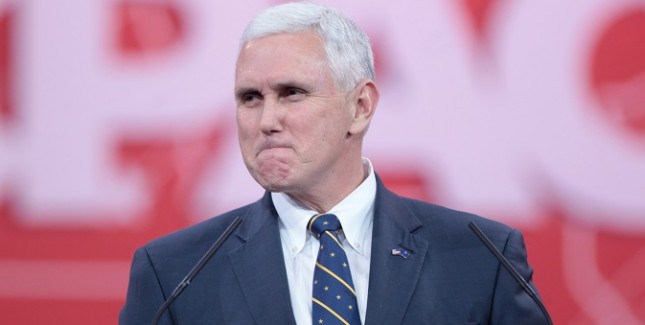
This website suggests that Pence said Michelle Obama is the most VULGAR 1st lady we have ever had.  He didn't!  Always fact check.  Try to look at things from both sides.Whenever possible use primary sources and ignore the rest!

Saturday, August 13, 2016

An open letter to Paul Ryan and conservatives who think that feeding children for free at school is wrong.

Paul Ryan, a young leader, who holds family values dear spoke at the CPAC convention this year and attacked the government's feeding programs at schools.  My district last year offered free breakfast to ALL students (one way to keep the stigma of being a free and reduced lunch program kid).  Here is what he said.

He repeated a story Eloise Anderson, who serves in the cabinet for Wisconsin Governor Scott Walker, had related.  She once met a young boy from a poor family. And every day at school, he would get a free lunch from a government program. But he told Eloise he didn’t want a free lunch. He wanted his own lunch — one in a brown-paper bag just like the other kids’. He wanted one, he said, because he knew a kid with a brown-paper bag had someone who cared for him.
He went on to say that “the Left” doesn’t understand this desire for dignity, not just comfort.

 Dear Mr. Ryan;
I don't like labels, but I confess, that you would label me as a liberal because I believe that working together (my civic understanding of government is just that) we can provide what a child needs which includes a full stomach.  I have worked with children all of my adult life, and I know that without a full stomach a child will have an empty brain. I acknowledge the idea that is expressed above, knowing all too well that a child desperately needs to feel that s/he is important to another living soul.  Mr. Ryan, stop suggesting that people who YOU label liberal do not understand dignity.  That statement only drives us further into camps that attack one another.  Teachers spend a lot of time focusing on a child's dignity whether they vote Republican or Democratic. The food is not intended to fill up the child's soul.  It is meant only to make the child comfortable enough to learn and find the support and friendship that is available in the school to fill his soul.

You see, Mr. Ryan, school is filled with people who's souls are overflowing. The child has to be open to receive that overflow.  Teachers, counselors, librarians, and others there have chosen a life of service to children.  They are conservatives, liberals, Christians, Muslims, Hindus and yes, even Atheists who know the value of love and offer opportunities to their young charges to grow in love and caring.  Children have a natural desire to help one another.  I have watched as they accommodate a child in the classroom who is homeless and acting out in destructive ways.  I have seen teachers and parents who bring clothing and caring to the school to support these children.

Mr. Ryan you are quite right.  A full stomach doesn't fill the soul.   That job happens after the child has a full stomach.  It happens when teachers, parents and children come together to provide the love that is missing in a young life.  NONE OF THAT WILL HAPPEN IF THE CHILD IS HUNGRY!  If we (the government-- we the people) feed hungry children it is not an evil, soul destroying event!  It is not a panacea for a societal problem.  It is an opportunity to intervene and offer hope.


Monday, May 30, 2016

An ear for truth, George Washington was the 8th president of the United States?

One of the joys of being an elementary librarian is awakening and nurturing the questioning skills that kids need to be good thinkers and good citizens. The  dark side of questioning is answering.  How can students obtain ACCURATE and UNBIASED information in today's technological information silos? 

This was the question when  my morning news team presented their Interesting Fact on the last day of school.  Neal  proudly announced that George Washington was not the first President, but rather the 8th. Usually, I see their script the day before broadcast, but in the chaos of the last days, I had not seen it until 5 minutes before air time.

I knew that Neal found this fact on the internet, (that is where all digital natives go) and so we looked together to check for veracity by googling his statement.  I did not believe it to be accurate.  I explained to him that during the time between the revolutionary war and the ratification of the constitution  (March 1, 1781, and April 30, 1789) we had the ARTICLES OF CONFEDERATION which meant that the 13 colonies in most ways operated idependently. I was not sure that the position of "president" even existed.  But cetainly, the leader during this time would have had very limited powers.

As so often is the case, digging into history is complicated and a simple answer does not exist. The google search brought up ten articles which all concurred with Neal.  Beginning with Wikipedia. So we went to air with his "fact."   It was only later when I had time to do MY 'due diligence" that the truth was clear.  This illustrates why teaching about research and sources is crucial!   We need to discuss the value of crowd sourced reserch like Wikipedia (I am a proponent and editor).  But we also need to acknowledge its limitations. Let me describe how I approached this question. 

As a librarian I eliminated any of the articles that were ".coms" from initial consideration.  There are perfectly good dot coms but I wanted scholarly, refereed sources as well as the actual document itself.  That left just two of the ten sources to be viewed.  One was the Constitution Society.  Before I read their article I nosed around to see if I could find out if they had a bias.  This usually means checking a statement about who the organization is, its purpose, and goals, and determining where their funding comes from.  This group's self-description included the fact that it educates, and also litigates.  For me, that elliminated them from my initial run through (I already knew that they concurred with Neal) so I moved on. 

What propelled me to continue searching something that seemed overwhelmingly correct was the simple question, "Why would all our history books list George Washington, as our first President if this weren't true?"  That is a question I am sure the conspiracy theorists have an arcane answer for.

A really good article from the Department of State outlines some of the debate surrounding the articles themselves.  It turns out that John Hanson, was President of the Continental Congress in 1781.  In this position he was not The President for his powers were so limited he could not even appoint the secretary of state.  At least I knew now where the term "President" had come from.  But I needed more.  Did the people of his time consider him the president of the United States?

The definitive article on this issue came from Digital History, a University of Houston website with valuable primary sourced information and commentary by scholars.  It clearly illustrates the difference between the kind of research real historians engage in and what I was doing.  (They go to  primary sources, discuss among colleagues the opinions they are forming about their meaning, and rigorously vet their information prior to publication).  Here is a part of the article:

"It The Articles of Confederation created a national government composed of a Congress, which had the power to declare war, appoint military officers, sign treaties, make alliances, appoint foreign ambassadors, and manage relations with Indians. All states were represented equally in Congress, and nine of the 13 states had to approve a bill before it became law."   

The Articles created an alliance of thirteen independent and sovereign states who agreed to "enter into a firm league of friendship with each other" This sounds more like NATO than the United States!  In fact, in the Articles,  at the beginning of almost all the statements issuing power to do anything come the words, "No State, without the Consent of the united States, in congress assembled..."   So it was not surprising to find that John Hanson held the office known officially as "President of the United States in Congress Assembled" In other words he was the president of the Congress or its presiding oficer.  He had none of the powers we associate with our president.

 The University of Houston article continues, "Under the Articles, the states, not Congress, had the power to tax. Congress could raise money only by asking the states for funds, borrowing from foreign governments, or selling western lands. In addition, Congress could not draft soldiers or regulate trade. There was no provision for national courts.  The Articles of Confederation did not include a president. The states feared another George III might threaten their liberties. The new framework of government also barred delegates from serving more than three years in any six year period."

Indeed, going between the original Articles and then reading scholarly analysis helped me understand where all the 10 articles that Neal found went awry.  With today's internet being a place where anyone can publish information and look official, we must be more vigilant. I was confident I had solved the question at hand.  I could say that George Washington was in fact the 1st president of the United States, and that John Hanson held the office  known officially as "President of the United States in Congress Assembled"    I then felt free to explore the internet to see what I could learn.

Googling the phrase "John Hanson president," I discovered one site that confused John Hanson with the African American and asserted that Barack Obama was not the first African American President!Upon googling "John Hanson, first black president" 830,000 articles appeared!  Some of these eve had photographs of John Hanson!  (Photographs only go back to about 1840)  I did not go too deeply into this absurdity --- because it was clearly in the realm of conspiracy theory, but it illustrates again the difficulty in getting good sources for our students.  The idea that whatever we perceive as truth is truth is a dangerous one and we need to help our students learn to ferret out facts while they are young, so that when it is time for them to vote they will have an ear for truth, but as we have an ear for good grammar.


Sunday, May 01, 2016

Commodifying Public Education: How did this happen?

Learn more about this here


A shout of jubilation went up as teachers heard the announcement that we would not administer the final part of the TN Ready test this year.  I did not join in the celebration. I will not celebrate until we defeat this culture that relentlessly continues the march toward the destruction of public education. 

Over the past 30 years I have watched as people use the words, of our founding documents (words that I believe in) to destroy the very things the documents set forth.  We could start with their edited version of the preamble ---they would turn that paragraph into two simple phrases: We the People of the United States in order to insure domestic tranquility and provide for the common defense do ordain and establish this constitution of the United States. In their understanding this is the only purpose for government.   For a history of how this happened read this fine article by a Canadian, Dan Laitsch "Smacked by the invisible hand: the wrong debate, at the wrong time with the wrong people." 

While it focuses on education it exposes the subtle way in which words were manipulated by a group with an agenda.  Among the discarded ideals is that which states that everyone benefits from the success and education of all.  The idea which replaces it is that everyone must be accountable and responsible for themselves.  If they fail to get rich or get a good education or have access to healthcare or other services it is their fault because they made bad choices.  TRANSLATE everything that has happened in their lives is their fault.  I'm on board the personal responsibility train!  I spend a lot of my time as an educator helping kids become more responsible.  The problem comes for me when the interpretation is unrelenting and unforgiving.

This "neo-liberal economic philosophy" sees "Government" as an evil that should be limited whenever and wherever possible.  Government regulation is always bad because it decreases PROFIT. What would our world look like without government regulation and oversight?  Wealthy people whose money works to increase their wealth would fare well.  They would have access to everything they need in their gated communities.

For the rest of us, who "labor" for a salary or an hourly wage - not so much. HERE IS WHAT WE WOULD HAVE 

Food industry --- FOR PROFIT means --  no control over what is in the can you buy including pesticides and contaminants such as the little snake head in a recently opened can of green beans. 
Healthcare industry FOR PROFIT means -- continuing HMO-type care where you have less contact with a personal physician (who is limited to 15 minutes with you) and you are just a cog, a part, in a profit oriented system.
Insurance industry FOR PROFIT means -- they take your money BUT it is not pooled for your benefit, they will use it to hire people to deny your claims and keep you from getting money from the coverage for which you paid. This will increase their profit and pay their investors!
Education -- continued expenditures for publicly funded private schools - (charter schools) thousands of programs and software options over actual education expenditures.My school alone spends more than $12,000 a year on I-ready a software subscription which steals good education time and uses games to try to "improve" student performance on the test.  Thousands of tech companies eager to sell districts the latest and greatest gadgets (we have vendor fairs all the time so we can be exposed to the latest sales pitch)  Estimates of companies being able to garner billions in educational funds while my library languishes without proper space, furniture or computers for research is obscene!  Teachers should be replaced with programs which students can use to educate themselves -- gone is the common ground of what we as American's believe.....If you want to teach that the dinosaurs were put in the fossil record by Satan to confuse Christians --- you can do that in your private school -- but I resent my tax dollars going to that "education!"

Let's also think about some other areas where we traditionally share costs for mutual benefits -- Transportation - Museums---Parks and other public places are all headed for privatization with one goal in mind --  to make money --- We can stand by and watch the Disney-fication of our culture or we can elect people who are thinkers and who ferret out the truth rather than accept what the think tanks (propaganda mills) tell them!

If you want to understand how we got here and who has been driving the bus since the 1970's  read the article, It is long (25 pages) -- but some things cannot be said in 140 characters!

Sunday, April 17, 2016

Bathrooms as Sacred Space where the Book of Common Prayer was the Readers Digest

We had one bathroom and next to the stool was a basket of reading material. I never questioned the oddity of that as a child. As an adult I do not think of the bathroom as the best place to read, but as a child I thought of this basket as a gateway to adult interests. There were always National Geographic magazines and Readers Digests. I liked the National Geographic very much, but it was big and the articles with pictures were long. Reader's Digest on the other hand was just the right size for a child, and it had jokes and puzzles in it! I adored Word Power and was delighted that it still exists.  It is where I built my vocabulary until I learned to write down and look up new words in the dictionary.  So despite the fact that my teachers eschewed the superficiality, light weight and skewed nature of the Readers Digest I was drawn to it. My brother and I often escaped to the haven of the bathroom at times when we were supposed to be engaged in our chores. Constipation was always a good rouse for avoiding the time of evening dishes.

This stalwart conservative-leaning publication was a cornerstone of my education. I had not read it for years, when it caught my eye as I waited in line at the checkout stand at my supermarket. Still Proclaiming itself in Times New Roman glory, with slightly altered format for the index, there it was with its intriguing articles. "35 extraordinary uses for ordinary things" was the title that caused me to purchase the once ubiquitous magazine. But what really snared my attention upon closer inspection was the article "The Darker Side of the American Lawn" It should be required reading this spring before anyone goes to the golf course, park or considers a trip to the local big-box purveyor for "lawn food!" Here are a few of the statistics from this venerable bastion of conservative thought ( in case you just thought this was another one of the tree-hugging, latte sucking articles).
  • Americans have become obsessed with grass.  When you add up the country's 80 million home lawns and over 16,000 golf courses you get close to 50 million acres of cultivated turf in the U.S.
  • Americans are spraying 67 million pounds of synthetic chemicals on their grass every year.
  • More that 170 Canadian cities have banned lawn pesticides -- especially on public spaces.
  • Denmark, Norway and Sweden have banned 2,4-D ( a common chemical -- often known as agent Orange in lawn herbicides)
  • In 2009, the European Parliament passed laws banning 22 pesticides that can cause cancer or disrupt human hormones or reproduction. 
  • Conservative estimates suggest that 72 million birds die in the U.S. of pesticide poisoning each year. 
  • Wood Thursh is down by 48%, Bobwhites by 80%, Bobolinks by 90% and we almost lost the Bluebirds -- but thanks to recent efforts by individuals to provide nesting boxes and assist them they are slowly coming back.  
 It is important to note that not only do these lawn chemicals kill "weeds" like clover which naturally sets nitrogen in the soil, but their use requires the addition of artificial sources of nitrogen to be added which in turn run off into the lakes and streams causing other problems like algae blooms that in turn suck the oxygen out of the water causing fish and plants to die and creating huge dead zones. All of these events have cascading effects which often cannot even be predicted.

If we want to save our planet, its pollinators and ultimately ourselves we need to start putting in native plants that will make your yard a haven for caterpillars, butterflies and birds.  For us in Tennessee that means plant joe-pye weed, rudbeckia and other species like Black-eyed Susans that bloom all summer long, Button-bush, Butterfly Weed and swamp milkweed.  We need to put in vegetable gardens and experience the joy of fresh natural organic vegetables.  Consider feeding the birds until we get enough native plants for them to live on again.   Their populations have been decimated over the past decades of habitat destruction and poisoning. Don't eradicate a weed until you are sure that it doesn't happen to be the one plant a single species of butterfly relies on.

Read the rest of the article and learn how to bring back beneficial insects, plants and animals into our environment.  Read the article and let its information change your behavior.  and if you really must kill a weed -- skip the Round Up and use this natural formula.  


1gallon of vinegar
1 cup of salt
1 Tbsp. of soap

This simple spray works as well as the toxic versions -- just be sure to spray it on a dry day when it will have time to work -- if it rains it can become to dilute to have effect!

Wednesday, March 30, 2016

PicLit from PicLits.com
See the full PicLit at PicLits.com This is a great application for teaching kids parts of speech in a fun and creative way. Especially during poetry month, this would be a fun to let kids work on both poetry, parts of speech and imagery! They will love it. You do have to have an account to generate an embed code or save it and email it to someone. LOVE, LOVE, LOVE this!

Friday, March 18, 2016

Unpacking the TN READY Communication from the TN DOE

Commissioner McQueen has published two pieces to try to calm the wave of bad publicity that is washing over the DOE on the basis of what parents are seeing and hearing from students and teachers about the paper TN READY test which replaced the failed computer administered version.

I first read her blog for parents: Classroom Chronicles which is an explanation for parents about the failure of TN Ready an attempt to calm fears about the paper tests.  She says, "We too are frustrated and disappointed by our inability to provide students with an online test this year and by the logistical difficulties. We have been working tirelessly to provide a positive testing experience as much as is within our control and to reduce anxiety."  Really?  Will the DOE have their salaries cut or be fired because of their failure on the testing front?  They tie teachers success and failure every day to things that are beyond that teacher's control! Why not apply the same standard to yourselves?

Then  Dr. McQueen provides a form for parents to give them a sense of significant participation.  The form however only asks how the parent would like to receive their child's test scores.   Parents are asked to weigh in on crucial issues such as whether to report data in smiley faces, arrows, or symbols!  This appears to be a simple way to make people feel that they are part of a process.  In truth, it is like asking a man on trial for familial abuse, "when did you stop beating your kids."

What I DO KNOW is this:  I know NO teachers who:
  1.  think this test is a good measure of student learning 
  2. participated in its formation. 
  3. have ever felt free to participate in a frank conversation it with any forum where their names and places of employment are readily seen. 

The second Classroom Chronicles blog post is supposed to dispell any of the issues raised by students, parents and teachers.

She addresses the issues raised by a number of concerned educators that the content was not appropriate for the students.  The following is a quote which further illustrates just how far removed the people who designed the test are from children!

"A very small number of questions on Part I require students to have had exposure to other mathematical content that may not actually count toward their score. For example, students may have seen a word problem that mentions a concept that they will learn more about later – like angles or ounces– but students will not be scored on their knowledge of this content. These concepts may just be used to provide context for a computational skill (addition, subtraction, multiplication, and division). Additional questions may require students to pull from previously learned content knowledge. As this is content that is below grade level, it would not appear on the grade level specific blueprint."

Imagine back to your eight-year-old self.  Much of what your teacher is teaching is just not too interesting to you, but you know there is this TEST coming up and you really should care about learning this stuff because it is on the test and your teacher is stressed about how you are going to do and your parents talk about how if you don't do well on the tests it will ruin your life.  Imagine for a moment that you are now reading a test question in which something right there in the midddle of it suddenly looks like a foreign language.   Do you have the intellectual ability to read the rest of the question and calm yourself sufficiently to determine that the question is not about the DNA helix but is a simple addition problem?  You get my point.  Yes if it is asking you to use cm instead of inches to measure and you have in the standard learned to use inches and you are an adult looking at the picture of a little ruler next to the question in cm you will understand how to solve the simple problem.  BUT THESE ARE CHILDREN!!

Most of them do not have the experience in solving problems to know how to approach this.  They will feel a sense of panic and collapse under the weight of the foreign words "angles" alone!  Add to that that nowhere does it say in the directions we heard read to the children (remember the administrator can only read the directions --- they cannot offer explanations because that might taint the test) to help children understand the question is considered leading the child to the right answer. NOWHERE IN THOSE DIRECTIONS DOES IT TELL CHILDREN THAT, "Hey, some of these questions may be on stuff you haven't had and those won't even count or be graded!"  How reasonable is it to assume that when you cover your classroom walls to hide every possible thing a kid might use to do well on the test -- and everyone is in a lock-down version of life (guarding test booklets, pencils and answer books as though they were radioactive) Does anyone think that a child is going to consider for a moment that some of the questions won't even count?  REALLY?

Dr. McQueen goes on to explain how reasonable the actual test was.  NEVER mind that the answer document (they called it a document, in the directions- now that is a word kids use every day, right?) looked almost identical to the test document! The whole thing was confusing to children from beginning to end.  MOST especially the vocabulary used in the directions..From an adult point of view Dr. McQueen is quite right --- it would be difficult to get mixed up about what answer went with what question.  These are CHILDREN not adults and I, as a proctor, can attest to the fact that the 3rd graders I was with were confused.  My last point is simple.  WHAT ARE THE TESTS designed to do?  If it is to help us see where to improve our instruction fine I'm good with that, but tests are misused to judge children and teachers everyday. 

They discourage educational innovation and good practice because my colleagues are always worrying about the specific things that must be covered on the test.  So with the garden in full grow mode, with the wild creatures and native plants that inhabit the perimeter of my campus budding and growing, with the night sky waiting, and the life bursting forth all around, we will be in the classroom drilling instead of out in the world writing, reading poetry, planting, wondering, exploring, and asking those impossible childhood questions.

 I AM CALLING FOR AN OVERHAUL in how we hold PUBLIC SCHOOLS accountable.  I AM CALLING FOR AN OVERHAUL that lets teachers be teachers so they are able to do what they do best with children.  Yes, that may even look different from one teacher to another teacher!  YES, teachers are as individual as students. They don't all teach the same way, understand the same way or participate in the universe in a monolithic pattern of teacher behavior!    PLEASE Dr. McQueen, I know you are young and you think you have these things down --- but listen to some seasoned educators on this topic!  Are you listening!! 

Sunday, March 06, 2016

What is a hero?

Third Grade wanted to merge two concepts for Black History Month.  Students could research famous African Americans and then measure them against a rubric of what makes a hero. I could not in good conscience do a simple webpage with the people on their list. So instead I tried to accommodate by broadening the site and creating a Good Citizen Rubric as well as a Hero Rubric.  Heroes come in all colors was the result as was the accompanying Symbaloo for African American History Month. 

In our current culture we conflate the hero with celebrity. We carelessly toss this word around and in so doing we we weaken its meaning and message. When we call everyone who has served in the military a hero we risk including skin heads, bigots and those who have committed war crimes on the same list with those selfless souls who have given their lives and bodies in the service of humanity.

If, as Campbell suggests, the hero myth is designed to lead us to our better selves then the hero returns home carrying something of  the treasure.  It is the  "treasure that has the power to transform the world as the hero has been transformed."

This is why we yearn to teach the hero story to our children.  We want the world to be a place where power is distributed and the well being of all creation is the ultimate arbiter of our actions.   Sometimes in a world where kids pick Beyonce, and Kanye West as their heroes I tremble.....