Thus far we have focused on the literature and sites which expose the Common Core as an evil.
In this post I will focus on the actual common core standards and some examples from classrooms which demonstrate the common core in practice. Because of the breadth and depth of the core we will look at 1st grade to get a sense of what it is and what it is not.
1st the core sets standards but doesn't dictate curriculum. This gives each state, town, school a lot of latitude to teach those things that are near and dear in that region! Doesn't sound much like government control does it?
Since the election of Ronald Reagan in 1980, and the appointment of William Bennett as Secretary of Education, monumental changes have driven the educational practice. Bennett published "A Nation at Risk" in 1983. This
report of the National Commission on Excellence in Education, a Reagan
created commission, largely indicted our entire educational
system. It was based on a perception that our educational system was
not able to compete with education offered in other countries. Here is a brief history of the department of Education.
In no small part because of this frenetic pace of experimentation and change brought on by this report teachers can expect yearly changes is what they are to teach, how they are to teach, what measures are used to determine if they succeed, and the philosophy driving their teaching. I can think of no other profession which has been subjected to this constantly shifting philosophy.
One of the teachers who came to my school after graduating from a premier college of education, believed that she knew better than those older teachers how to teach has succumbed to this pace of change and the frustrating impossibility of keeping up. She is starting to sound like one of the older teachers. I did not hesitate to point this out to her since she used to readily stand in judgment of the poor practices of those teachers whose skills were out of date.
As I began thinking about this I had questions. It is what happens when you do research. Sometimes it seems like your questions are leading you down a rabbit's warren. You must follow these leads to increase your scope of understanding. Ideally this is what the common core leads students to do. The whole goal is to create curiosity and encourage sound development of a students ability to question, seek answers, and determine what the best choice is. It also helps students learn that answers will continually be refined as new information presents. What could be bad about that!?
Indeed this is the reason I support the core. For the years following Sputnik when we had emphasis on math and science (sound familiar?) a push was born to modernize public education which culminated in raising the Department to a cabinet level position, which ironically is where it began in 1867. One of the things the Core fuels in those who fear it is that the core is a Government takeover of education. What it really means is the federal government is offering incentives (or bribes if you prefer) to work toward the overarching goals (standards) set by the committee which foes claim were not even educators. After checking that out I learned, as those who support the core rightly suggest, that they were educators.
Yes, actually the majority of those who wrote these standards were members of faculties of university departments of education. That means that they were most likely K-12 teachers at one time, but in any case they were deeply involved in the quality of education and preparing teachers to teach!
In the next post we look just at the standards themselves.
Sunday, October 11, 2015

Saturday, October 10, 2015
Part II - Thinking Critically about the Common Core -
This piece on why the common core is bad is impressive. It had me agreeing with it by the time the young man from Knox county completed his attack on the core.
Even the two experts who helped create the core, according to this video speak out against the final product. But once again when you dig deeper this claim is not what it seems. Bits and pieces, partially true, are culled out and used in slightly twisted form to elicit your agreement and lead you down a very manipulative path. For example the two educational experts mentioned were not part of creating the standards, but are rather part of the vetting process at the end. In the case of the math standards This article artfully explains the fallacy of Dr. Milgram's vocal objections.
The fellow who created this video is a Canadian, living in Japan (which immediately sent up "red flags" about why he was interested in the common core and made me look at his entire body of work). I determined that he is one of the group of folks who see conspiracies to create a "new world order" in many things.
He vilifies Bill Gates who gave millions to help create the Common Core suggesting he had an ulterior motive. While I personally prefer that we fund education from our commons (taxes) rather than relying on philanthropy, I don't believe that there was any evil intent behind the money Gates gave for the common core development. The google search I did on Common Core (hereafter dubbed CC) yielded conspiracy stuff all over the map. There are those that think it s carrying forward an evil United Nations agenda and others who think it is leading to tracking what your children think so that the government can control your mind.
One of the skills I learned in school was about vetting sources by recognizing the bias of those who wrote the material. Even someone who seriously wants to learn about the CC presents real problems. In large part when you do a google search you will see things Goggle has decided to show you based on the algorithms of your previous searches. Google analyzes your search history and presents you with what it thinks you want to see. This results already skew your data to your preexisting biases. I get different results from the same search so how do I know I have "valid and good" information?
Google further puts what it decides you want to see in order of what other people who are like you read. So you see how difficult it is to ferret out the "truth" of anything. Thus, items by conspiracy theorists rise like cream to the top of the google search for the person who google thinks might be interested in this kind of thing over scholarly studies from universities. Site after Site are posts by groups like right-reason.com, Freedom Works.org, Karen Bracken (a talk show host is leading an impeach the President and save our country effort) most of these and others are self-described tea party patriots" who see everything as an attack on freedom. The people in these groups tend to see everything as black and white.
They take a specific anecdote, and apply it as though it is happening everywhere. Let me give you a specific example from one of these websites. "An elementary school librarian told the group that elementary kids in her school "are being forced to read technical books instead of stories and they don't like it. They said the books are boring and they are losing interest in reading." The Librarian said she was instructed to tell the kids they must learn how to read these manuals if they expect to get a job at Volkswagen (VW has a facility in TN)."
Let's unpack her comments. First teachers are being required to use non-fiction (not technical manuals) but a technical manual would qualify as non-fiction. Indeed, as a librarian I am purchasing more non-fiction than I used to. I believe this is good -- Many kids who never wanted to read fiction are captivated by non-fiction. It is more difficult to read non-fiction because you must learn factual material instead of just remembering a story line. It is also easier to teach critical thinking from a non-fiction text as you tear into it pulling out the most important fact and the supporting data. Do I believe elementary students were reading technical manuals?
No! They might be exposed to reading real technical manuals. The teacher might have been told to tell kids they need to learn this skills so that they can read technical manuals -- and get a high paying job at a place like VW -- probably. I often tell kids that I taught myself to play the guitar because I could read a "technical manual" in the form of a how-to book! Once unpacked this anecdote sounds a lot less ominous. Also, let's be honest, the people in our communities have accused schools of teaching irrelevant material for a long time and it seems reasonable that we would be justifying what kids are learning not only to the kids but also to the general public showing how one could get gainful employment from it.
We must learn how to look at things to find the biases and then how to find good unbiased information. That will be the next post.
Thursday, October 08, 2015
Critical thinking for adults in a world flush with "information" and conspiracy theory about the common core!

What Lily misses is an important difference between our government and the government of communist china. Our government is US ---we regularly vote people into office and out of office. We have constitutional issues we vote on. IN TRUTH the common core may be tossed out before we find out if it is good or not because their is so much conspiracy theory out there about it! I hate to be the bearer of these tidings, but Lily, the government already knows you are a citizen and the IRS has your number in case you to do not pay your taxes (the price of belonging to this great club we call The U.S. and having public schools, garbage collection, roads, social security, libraries, public colleges and land grant institutions etc....all goods that we share in common and support with our TAXES.) Yup who knew -- TAXES can be good especially when they fix the pot hole down the street!
My friend found this post disturbing. Did I know anything about this? Well, no. But as a librarian, it is my job to find out! I immediately began to search for information on that great heap of TREASURE and TRASH that is the internet. What I found was a lot of conspiracy theory and virtually no real information about what is actually in the common core in the first pages of my google search! People get a buzz from being angry or upset, while peaceful thoughts don't boost the blood pressure. What fun is that?!
I am going to dedicate several posts to this since it deserves more than a cursory look. So today I would like to focus on who we believe when we are looking for information. I will be showing you some things that on the surface seem very reasonable and only upon deeper inspection send up red flags as the authors move deftly from fact to fantasy. Stay tuned if you are really curious about what Common Core is and whether we need to tweak it or throw the baby out with the bathwater Of course, this is ALL from my analysis and point of view. You see we cannot divorce ourselves from the baggage of our experience, education, reading, friends, and the time in which we are born and raised!! AT best we are aware of our bias and struggle to understand and combat it! That is the first important fact. If you want to know what biases I have you might want to check out who I am .....am I trustworthy? Am I widely read? Do I know a lot of people with different viewpoints or do I have only friends who reflect my personal belief system? Do I have experience with the subject I am writing about? These are valid questions and need to be asked whenever we read information. By the way teaching this skill is one of the common core objectives...hmmm
When I was growing up the news was separated (in as much as is ever possible) from opinion. There was the editorial and news. News attempted to be dispassionate. Example #1 - You could not interject something like this article from the Heartland Institute does. Let's take the first bit of its reporting about the common core.
"Montana legislators are debating a proposal that would repeal the state’s implementation of the Common Core State Standards, a set of requirements for what elementary and secondary school children should know in each grade in math and English.
On November 4, 2011, Montana was the last of 46 states to adopt Common Core. Other states, such as Alaska, Nebraska, Texas, and Virginia, never adopted the standards, and a recent nationwide backlash has led to successful repeals in Indiana, Missouri, Oklahoma, and South Carolina." so far it is only factual reporting with a foreshadowing of where we are headed since the article is focusing on repeal already.
Common Core supporters say implementing standards that are both high and unified with other states will jumpstart the U.S. education system and improve student achievement on a mass scale. Still factual -- but wait here it comes...."A study from the Brookings Institution contradicts that claim, instead finding government-mandated standards fail to correlate with student achievement. For example, every state has had its own set of standards for many years, yet variation in achievement is four to five times larger within states than between them, despite the quality or rigor of the standards." source https://www.heartland.org/policy-documents/research-commentary-montana-common-core
This is a tame example. So first things first -- who is the Heartland Institute and the nice thing about this particular cite is that their site has an about feature which lets you learn about them. Following it you find out that this is an organization dedicated to " discover, develop, and promote free-market solutions to social and economic problems." Armed with this information I can pretty well guess where they will land on any number of issues --- like environment, constitutional reform, healthcare, taxation and government....but at least we start with an understanding. NOW AS ACTUAL INFORMATION --- NOT SO MUCH! I need to first LEARN about what is actually in the common core. To do that I need to go to a website like http://www.corestandards.org/about-the-standards/. Here I found Information about what the core is, how it came to be, and I can even link to specific curriculum. So this is where I began my exploration. Is this site without a viewpoint. NOT HARDLY --- these guys spent years of work creating the common core. Think they have an investment in getting you to understand and appreciate it. You bet they do. Tomorrow we will explore that!
Tuesday, September 15, 2015
Teaching Young Naturalists
 Tomorrow we will take a "field trip" to our garden and students will each select something special to observe in old fashioned naturalist tradition. They will be carefully drawing what they observe, framing their observations and questions, learning how to think like a scientist. They will model on the great naturalists from the past. I hope to get some of our kids and teachers to read - The Evolution of Calpurnia Tate. It's the perfect book to set young students on the path to be naturalists. Calpernia is a young girl at the turn of the last century whose curiosity leads her to be a naturalist in a time when girls rarely did these things. Her relationship deepens with her grandfather who opens this wonderful world to her as she struggles against the traces of being a girl in a boys world. While those themes may dominate in some readers minds, the beauty of this book for me is that it gives children today, not only a glimpse of life in a different time, but also gives them a glimpse of how they might look at the real world at this moment!

Another book that helps students see the world and how interacting with it can change us is One Beetle too many! If for no other reason than its author, Kathryn Lasky, it is worth reading. Lasky never misses an opportunity to help kids gain insight into what motivates people. She carries us along as we see how Charles disappoints his Dad, but remains true to what is stimulating his curiosity. Why are there sea shells on mountain tops? What makes plants and animals of the same species so different in different parts of the world? The book is a mixed-media treasure trove for kids to explore.
 Kathryn Lasky undertook a biography of John Muir, arguably America's greatest environmentalist. Like all naturalists he begins with a love of the land. The book traces his ever growing commitment to the land in all its variety. As the founder of the Sierra Club in 1892 he was
influential at a time when other naturalists were beginning to frame the idea of preserving land for its own sake. This book is full of stories from his childhood that lead him into the path that changed our understanding of the wilderness. I will be starting a Young Naturalist's book club afterschool soon, and I invite you to follow our exploits, journaling, as we inspire our students to love this precious planet.
Of course for me, though I will not purvey this to my students, this involves my deep experience and understanding of our Lord who calls us to be stewards in His garden. "Then the LORD God took the man and put him into the garden of Eden to cultivate it and keep it." Genesis 2:15 (JPS Tanakh 1917)
Here is a link to Jean Ritchie singing the old Appalachian song Now is the Cool of the Day Now is the Cool of the Day-
Sunday, September 13, 2015
Hebrews 10:26 - How working in a garden changed my life....
 |
| 1st graders harvest what they planted and roast the veggies! |
As early the 70's it was clear that fundamental change to our consumption patterns was necessary. After Reagan became president I gave up on changing things. His strong opposition to government regulation rendered large swaths of environmental legislation impotent. (This is not a republican/democrat issue - EPA and the Clean Air Act were Nixonian--remember) I couldn't even teach about Earth Day in the public schools. To do so brought accusatory phone calls from parents who believed that mentioning it was teaching a communistic world view. There was no reasoning with these folk that planting seeds, growing food, or using less plastic was a simple recognition that resources are finite. No matter how I talked about these issues I could not convince these parents that teaching about this was an act of patriotism.
 | |
| Read how school gardens make strong minds and healthy bodies! |
Memories flooded back from childhood in the garden with my parents and grandparents, in thickets on Sunday afternoons by the side of the road, walking down the canes and getting scratched up as we picked the plump sun ripened berries that soon became cobbler with home made ice cream melting on top! These berries were part of a common wealth growing as they were in hedgerows and bar ditches!

I was stunned to see animals bred so that they could not even support their own weight and were contained for the entire short miserable lives in metal crates. Knowledge is a terrible thing. As a Christian I was well aware of the scripture from Hebrews 10:26 "Dear friends, if we deliberately continue sinning after we have received knowledge of the truth, there is no longer any sacrifice that will cover these sins."
It became critical for me to find local farmers who raised their own animals humanely without hormones and antibiotics, who raised their vegetables without pesticides, herbicides, and artificial fertilizers. These things cost far more than the heavily subsidized agribusiness of Smithfield or Hormel, but I chose to pay these prices and found myself wasting far less food and eating less meat. I learned from these farmers and the food that I put on my plate took on a new meaning.
By now, I believed that there would be no movement on the major issues relating to these issues, but as for me, I was going to live out my deeper understanding in as much as possible. I was committed to help children learn to taste the difference between the food they bought at the grocery store and what was grown in the garden. I learned that they will eat and enjoy tasty vegetables especially if they help grow them! We made spinach salad, roasted vegetables, and fried green tomatoes. The children helped cook in the library, and declared everything to be tasty! I knew I was on the right track last spring when I saw a flock of children descend on the garden and eat (unwashed mind you) pea pods filled with sweet English peas. In 2009 children would regularly say, "EWE that has dirt on it" and sometimes they didn't want to eat it even after washing it (the vegetables in the store afterall are shiny with wax and packaged in wrap)!
So where do we go from here? I'm open to suggestions.
Tuesday, May 26, 2015
Good Book and Good Food Go Together!

 Making things from scratch might not be a familiar experience for most my friends and soon flour, shortening, butter, and salt to create the crust were everywhere. Most people today just buy ready made crust or use a mix. Fortunately, flour is easy to clean up. After we rolled out the pie crust we started on the filling; peaches canned last summer. As we were measuring out a cup of sugar one of the girls asked why we weren't using "that sugar" pointing to the sugar packets that were in a basket from the Garden-to-table dinner from the night before. "Think of how many of the packets we would have to open to make one cup of sugar." I replied. "Yeah, but that is better sugar." I asked her why she thought that and learned that in her world "restaurant" meant good. Our children have learned to eat processed foods and fast foods and restaurant foods and believe that homemade, homegrown is not as good.
We also had a recipe book that I found in an old bookstore from 1881. It was great fun to open it up and see if we could follow a recipe that was 130 years old. When we opened the old binding several recipes and clippings feel out. These were dated November 17, 1912 and were in themselves instructive, illustrating how different times were. None of us would build a fire in our stove to make a pie for example, and one of the line drawings in these newspaper clippings were prompted a discussion about racism. You never know where things will lead when you embark on a journey. But in the end we had a satisfying experience and on Monday shared a berry pie that I had made and good conversation over what often brings people together -- food and good books.
Wednesday, December 24, 2014

I do storytelling in worship, usually as one of the scripture readings. This year I was tasked with doing something around the creeds and storytelling. I thought, OH MAN, the creeds are things that are considered inviolate and people have been put to death over changing even a jot or tittle of them. The early followers of Christ felt the need to address heresy by creating a clear statement of faith (a creed that could be recited in worship).
Growing up in the church I could recite the Apostle's by the time I was in 1st grade. I remembered from my confirmation class the heresies that the Nicene creed, (the first major creed following the Apostles creed) addressed. Beyond that I knew little so I did the first thing that any good librarian does, research. As is often the case, I started thinking about this in traffic between home and school. If the church were writing a creed now what would the heresy of our time be? As I was pondering this at the light where I often wait through three light changes my phone started to ring. The screen lit up as it played a ring tone telling me it was my husband.
In a flash of insight the heresy of our time came clearly into focus. It is that we deny the real for the virtual. We prefer images on a lighted screen to the reality of those sitting directly across from us at a dining table. Over the past few years, I have noticed that children do not possess even the simplest fine motor skills when they arrive at school. The only skills they have revolve around poking an icon on a screen.
While these skills are important in our world, the child who has mastered them often has no awareness of the real world. When I take them into the garden for the first time, I often ask what they hear. They hear the sounds of cars and and other human activity. I then point out the insect sounds, the sounds of birds, the wind through the white pine next to the garden. These sounds are perfectly audible, but unrecognized by them.
Next we line up at the cafeteria door as though we had just come into the building from the garden (in other words they form a backward conga line). Then we take one step back at a time until each one has passed from darkness into the "golden light of the sun." I learned this little trick from my favorite West Texas art teacher who used the experience to teach students the power of light to warm a landscape. I stole the activity to teach the power of sunlight to give life to a garden!
Next we move to the cabbage patch. Most people grow cabbage as a vegetable. I grow it primarily as host to the cabbage moth. I ask the students to look carefully at the plants to see if they can find a caterpillar. It is utterly astounding to me to learn that even though the plants are covered with the caterpillars the students do not see them (what an opportunity to teach camouflage!). When I point one of the little critters out there are squeals all around as one after another the see ALL of the caterpillars right in front of their eyes.
All of this to say, the heresy of our age is not technology, but our failure to use it wisely! If technology replaces real experience and real relationships it is heresy. If we use it to amuse ourselves to death, we are not only fools but heretics.
Sunday, December 21, 2014

Samuel is an ebullient child who is Jewish. "Samuel, I do celebrate Christmas, but I also celebrate Hanukkah, Ramadan and Dwali and I would be deeply saddened if I weren't able to share the joy of all of them."
What he was really saying to me was I hope you are part of my tribe. It touched my heart. I know that for children of faith backgrounds other than Christian The season of Advent and Christmas can overwhelm them and make them feel isolated. Even for those of us who are Christian, Christmas in the commercialized way that it is celebrated, often overwhelms us, too. Little Samuel's comment made me deeply joyful and sad at the same moment. How often do we do something that draws a circle of exclusion, without intention or even awareness?
This weekend I saw part of a movie on one of the "Christian" T.V. channel about the "war" on Christmas, Indeed the movie mixed patriotism and advent ending with a pagent where a flag was carried into the manger. It sent a chill up my spine. If we wrap the baby Jesus in the American flag we draw a circle of exclusion, for all the other countries around the world. We also draw a circle of exclusion for those Americans who are not Christian.
When I was a teenager, Glide Memorial United Methodist Church took the cross out of the Sanctuary. It was a move that caused a firestorm of controversy in the denomination and since we were United Methodists it was a point of discussion around our dinner table. . The minister suggested that the congregation focus on life and he viewed the cross as a symbol of death. At the time Mother was outraged for her the cross as a symbol of eternal life and I totally concur, but I also know that it doesn't mean that to everyone. It doesn't mean that to little Samuel, and because I understood that long ago, I stopped wearing the simple gold cross that my husband gave me shortly after we were married to school. Now I think the reason to take the cross out of Glide's sanctuary might simply have been to keep from excluding people who would be put off by it.
Saturday, June 14, 2014
Pulling Weeds
"Ever since the
eclipse of our native cultures, the dominant American view has been that we
should cultivate the self rather than the community; that we should look to the
individual as the source of hope and the center of value, while expecting
hindrance and harm from society. We have understood freedom for the most part
negatively rather than positively, as release from constraints rather than as a
condition for making a decent life in common......We have a Bill of Rights, which
protects each of us from a bullying society, but no Bill of Responsibilities,
which would oblige us to answer the needs of others." from The Web of
Life by Scott Russell Sanders

This thistle is a natural source of food, unlike the meal worms
I provide when we fledge bluebirds. We diligently try to assist them in their attempts to survive pitted as they
are against the invasive house sparrows brought to this country by immigrants 300 years ago. How ironic. Do I pull out a natural food source and then go buy niger seed for the finches? You tell me
Sunday, May 11, 2014
Water from the rocks..... Numbers 20:11

It still shocks and delights me to see a sight like this one on my way to school after a healthy rain last week. I couldn't resist pulling over to get the picture with my smart phone! I remembered a friend in New Mexico relating the story of visiting family in Tennessee as a child and having her Dad stop so they could get a taste of cold water projecting from the rocks by the roadside like a water fountain. I wondered if this water would be safe to drink today.
Tiny amounts of pharmaceuticals -- including antibiotics, hormones, mood
stabilizers, and other drugs -- are in our drinking
water supplies. In an investigation by the Associated Press, drinking water supplies in 24
major metropolitan areas were found to include drugs. Disturbingly I searched for the EPA information on our water system in Metro. "There are no reports for your area" the search screen established! I suppose in a time when we continually cut funding to our government with the idea that "anything the government touches is messed up." We cannot expect there to be enough people to do the testing and enforcement that the EPA is supposed to do. Disturbing!
As I was thinking about this I walked past the garden on my way to put my compost into the compost pile, I found one of the painters washing his paint bucket into the storm drain in the middle of the garden area. I have been thrilled to see these excellent painters take care and pride as they painted our halls, but instinct kicked in, "What are you doing?" I asked in a tone of voice that says I am your mother and you are in so much trouble. The man looked at me as though I was a bit daft, after all it was easy to see what he was doing.
"I'm washing out my paint bucket." I caught my breath. "When you wash things into a storm drain you might as well drink it you know --- it is gong to end up in your drinking glass."
"But it is environmentally friendly paint," he spoke somewhat defensively.
I tried to explain that low VOC paint only referred to volatile dangerous vapors produced by the chemicals. Paint is not meant for human consumption. How do we educate people to the fact that our actions impact our health and well-being. I guess the answer is one person/child at a time.
I ended my day with the words of Jeremiah 4:23-36, "....I have seen, and here the garden-land is now the wasteland, and all its cities are pulled down, because of God and his hot anger." Amen
Sunday, April 27, 2014
Big Miracles come in small packages!
 |
| Dad's use plans & work together |
It was girl scout greenhouse build day! Dads had tools --- not just tools, but TOOLS. You know the kind that make a lot of noise. They were consulting plans retrieved over the Internet, and orchestrating it all was one of the most dedicated parents I have ever enjoyed working with, Kathy Ferguson. She has led our girl scout troop for several years and has overseen the year-long effort to collect the bottles and do the ground work required for such a large scale effort.
The girls have been learning about the water cycle and conservation all year. They have also been learning about perseverance, dedication, postponing gratification, seeking funding, giving back to their community, and pride in accomplishment.
 |
| First Wall |

Hey YOU STOP LITTERING!

When I returned to school after the all day meeting, one of the little girls, a first grader, rushed up to me. "I asked my Mom to recycle a bottle this weekend. and you know what she said?" "No," I replied, expecting the Mom to commend her daughter for her desire to keep the earth clean. "She said we don't recycle."
"You did the right thing, I said, maybe I could talk with your Mom." I'll let you know how that goes.
Sunday, April 20, 2014
Do Butterflies have ears? and other GREEN Questions...
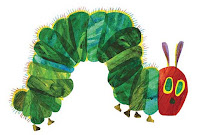
As is often the case in science the answer is complex. Some butterflies appear to have fairly sophisticated "ears," some appear to not possess the ability to hear. But what is most interesting is how scientists discover these fascinating facts. For example when the question is extended to caterpillars the story of how scientists discovered that they hear is fascinating. A budding scientist decided to do a test to see if caterpillars reacted to sound. He had a little sound generator and tested different frequencies to see if they noticed any reaction from the caterpillars.
The caterpillars ignored most sounds but there was a narrow band of frequencies that caused them to "dance." The interesting thing is that these frequencies were very low. He thought about this and tested different things in nature that make that low frequency, and he found that that frequency is created when birds flap their wings! Makes sense, doesn't it? A caterpillar can hear when a bird is flying overhead and take cover.
This is where the science gets so interesting. Clearly they could hear, but how did they? A college student noticed that the little hairs on the caterpillar's back were equidistant from each other. The spacing was the same length as the sound frequency to which they responded. They hypothesized that the hairs on the caterpillar's back acted like the little hairs in our ear, making the caterpillar act like a walking ear drum. To test this out, they shaved the hairs off a caterpillar and noticed that it didn't react anymore to the low frequency sound.
I learned once again that we do not know enough to be so bold as to think our knowledge will be sufficient to save us from environmental destruction. We are filled with hubris. There is a wonderful verse in Isaiah (55:8-9) For My thoughts are not your thoughts, Nor are your ways My ways,” says the Lord. “For as the heavens are higher than the earth, So are My ways higher than your ways, And My thoughts than your thoughts
Friday, April 18, 2014
Earthships, Clubhouses and Girl Scout Greenhouses
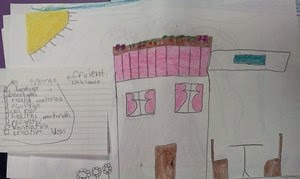 |
| 1st grade architectural drawing of the perfect clubhouse! |
The students used their developing presentation skills to show off their architectural drawings of the perfect energy-efficient (see checklist in the picture) clubhouse.
They have been thinking seriously about using energy and the impact it has on the environment. They have conscientiously been picking up trash, recycling not only to keep waste materials out of the environment, but also because using raw materials to make new things uses so much more energy. Even though the mathematics of percents are not 1st grade concepts they can understand that recycling aluminum saves 95% of the energy that making a can from scratch requires.
 Next week they will meet a real architect who works to design and build Leed certified buildings. I took the student's drawings and the book they read to him yesterday so that he would know what they have been thinking. Cory Dugan works for TLC Engineering, a firm that designs buildings for corporate and governmental organizations that meet LEED standards. They also adopted the Architecture 2030 challenge which intends to create carbon neutral buildings by 2030. As I write I am looking out at the framework for the Girl Scount Greenhouse going up. We will have the greenhouse set up next weekend! Cheers to sustainability!

Sunday, April 13, 2014
April 13 - Blooms and Green deeds.

 psychologists developed a way to categorize levels of intellectual behavior. Today educators are expected to find ways to pull kids through the stages and get them to the point where they are at the pyramid's peak. The graphic at the top is the result of work by a new group (1990s) of cognitive psychologists,
lead by Lorin Anderson (a former student of Bloom). The updated taxonomy reflects relevance to 21st century work. The graphic on the right shows the original Taxonomy.
Note the change from nouns to verbs associated with each level. Everything now is about doing! We move faster we do MORE. Kindergartners are forced to master work that was formerly 1st grade work. There is no time to allow students to develop at their pace, even though that is what is touted in differentiated instruction and in the "new" old Dewey models which give students choice and voice (note the alliteration). Yes they have choice and voice --- but be sure to keep up!
I always used the taxonomy and think it is very helpful in REFLECTING on my own thought processes and the processes of my students. So what has changed? We are being PROPELLED toward a future in education which is being driven by technology. In some ways this is good and in some ways I am ready to say, WAIT just a minute. We need to think and to reflect about what we want the future to look like. SHOULD everything be about GDP growth and employees being "ready" to plug into an employers needs? Maybe. Maybe that is not what we should be about in education.
There is a growing movement toward a different measure of success. The Happy Planet Index focuses on a broader measure. Is the future that technology is driving us toward one of sustainability? Check out the Index and give it some thought.
In an article in the New York Times about raising a moral child a study in 50 countries found that what was valued most was not achievement but caring. Would I rather live in a world where people care about their neighbors and the world or one in which corporations happily tell us what we want and convince us that we need to purchase it. Technology is neutral. It has no concern for humanity or this beautiful blue ball we live on. It s a tool. WE choose how to use it and my question for today is WHAT are we choosing by not being educated and aware? What are we choosing when we allow ourselves to be manipulated by a media which is bought and paid for by vested interests?
Friday, April 11, 2014
Green Deeds Days 8 & 9 and higher level thinking

They are especially moved by the photo of a bird which has died from ingesting too much of the plastic. A bright red lighter is clearly one of the items he consumed. Following the presentation we talk about the ways we can help. The obvious responses included personal responsibility, and maybe writing letters to try to keep companies from using so much plastic, but the most important role that these little citizens can have is in helping educate themselves and others. These are definitely common core higher level thinking skills!

When I went to purchase plants and seeds at my favorite garden center for our school garden I shared that my sense of weeds had changed and that I now viewed them with a respect due plants that were indigenous and important parts of the ecosystem. Then we talked about why I wanted to plant cabbage. When I explained that I wanted the kids to see the life cycle of the cabbage moth, she was appalled. "I spray for those," she said. This gave an opening to discuss the value of insects and natural balance and not using pesticides or herbicide to control them! While I don't think I won a convert, she was thoughtful, "Well, you've certainly given me something to think about" she said. This is all a teacher can hope for. To give someone food for thought.
Thursday, April 10, 2014
GREEN DEEDS Week 2

At first the kids were not sure about what was wrong. Then we watched a very informative video about plastic in the oceans. I did not tell them why I was upset, but after seeing the impact of plastic in the ocean they could figure out why I was distressed by my order. When they got it...they really got it. "How can I do something about this?" After several suggestions one of the students settled on talking to the person who owns the company. We also talked about how people need to learn about these things and how we can all be teachers to help others learn what we know. Then we talked about how our community needs to have plastic recycle containers next to the trash cans, so that when we pick up plastic waste that is thrown on the ground we can put it in the right place. Some of us are going to write our Mayor. I especially liked what one of the children said about a person who picked up and disposed of trash, helped others learn about recycling or wrote letters to people. Without any prompting, the student said, "He is a good citizen." Today there were 21 good citizens thinking of ways to help the earth in the library!
Wednesday, April 09, 2014
Possible Green Deed for Saturday, April 12th @7:00 p.m.

• honoring faith traditions committed to the Earth
• sharing stories of how climate change has impacted communities across the globe
• offering opportunities for further engagement and advocacy.Candles will be provided. Here is an opportunity for a Green Deed! Held at Scarritt-Bennett Center 1008 19th Avenue South, Nashville, TN,
Green Deeds Day 6 & 7

 One surprising thing about encouraging my kids to be more aware of the environment and see possible green deeds is that I have done this as well. This past weekend I took my glass to recycle it at the collection point near my home. I was not alone. Lots of folks were there to recycle. Here is our jumping off point for learning about recycling! -- Take the challenge track trash in your environment for a week and document it with your cell phone. You'll be surprised as was !
But the saddest thing I saw was what was in and around the big containers. Adjacent to the collection site was a truck surrounded by trash, even mattresses. Why would someone park there and try to do a PigPen recreation? It had rained the night before and I found trash floating in containers making it even more unappealing to do a green deed and pick up the trash floating there.I walked away.

Sunday, April 06, 2014
Day 5 Green Deeds EVALUATION


Maybe there needs to be a question on the evaluation form for children, "My teacher throws the best tea parties" with radio buttons for yes, no and maybe!
Subscribe to:
Posts (Atom)

